

Humans of Livigno The Culture You Feel in the Mountains
Livigno 03/09/2026
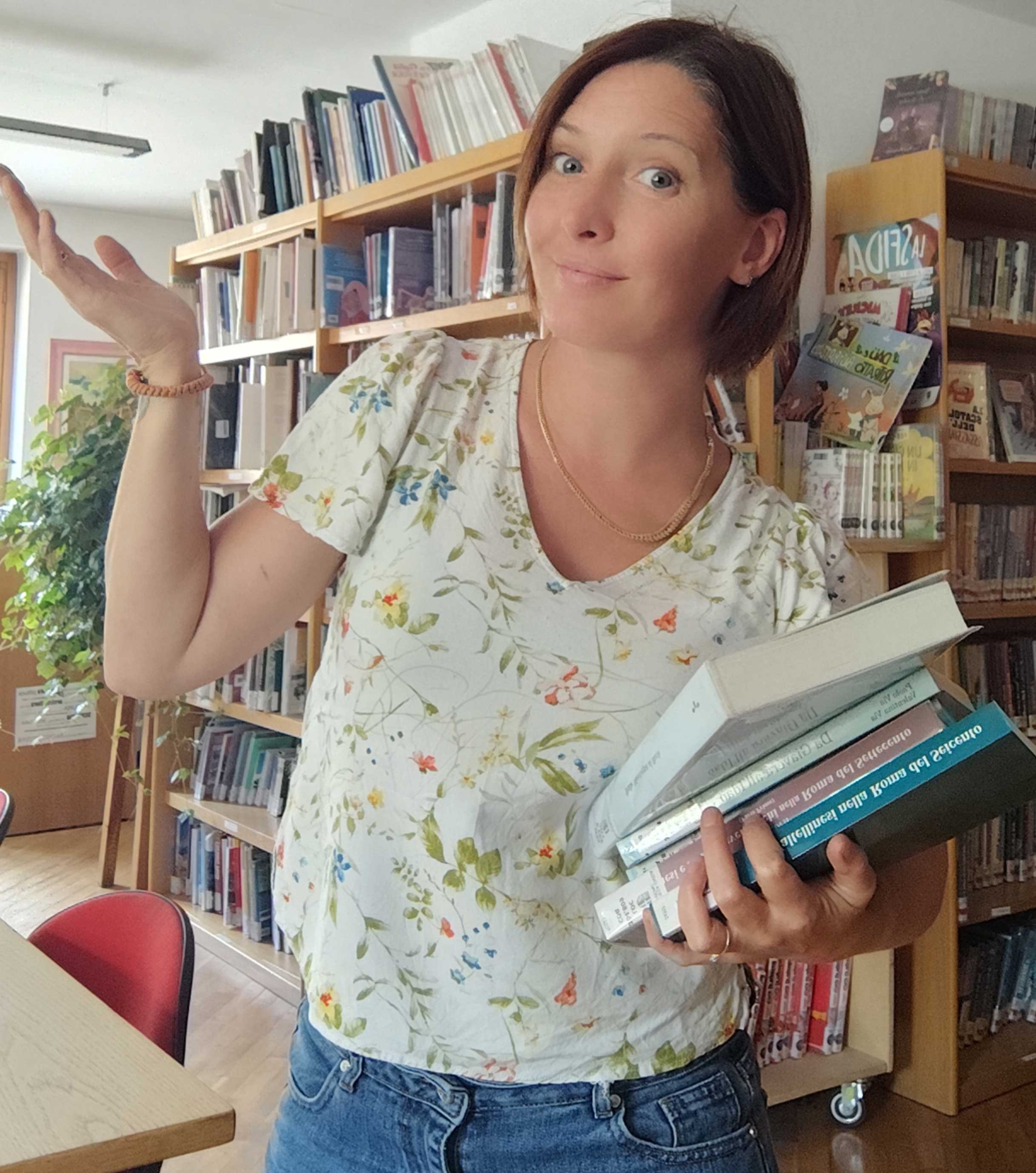
Livigno’s library is one of those places that surprises you with its bright, peaceful atmosphere. Large windows frame the valley, while among the bookshelves there is a sense of quiet that is not stillness, but concentration.
Alice moves naturally among the books: she brushes her fingers over them, rearranges them, looks at them with the care you give to something truly worth preserving. Hers is a discreet yet attentive presence, the kind of person who makes culture part of everyday life. We sit down near the section dedicated to the mountains, and that is where our conversation begins.
The mountains—especially a place like Livigno—are shaped by a delicate relationship between nature, movement and tradition. Within this balance, what is the greatest challenge in keeping culture alive?
“Definitely not becoming closed in on itself,” Alice says, folding her hands on the table as if to give weight to her words. “The real challenge is to remain vibrant and stimulating, even when you’re far from the big cities.” She then looks outside, towards the peaks. “The mountains naturally encourage introspection and preservation. But culture needs to do the opposite: it needs to open up, create dialogue and generate movement. It’s a delicate balance, but a necessary one.”
If you had to choose one book that captures the soul of Livigno, which would it be, and why?
Alice smiles, as if the answer had been there all along. “The DELT, the Dizionario Etimologico Etnografico dei dialetti di Livigno e Trepalle [Ethnographic and Etymological Dictionary of the Dialects of Livigno and Trepalle],” she says, taking a substantial volume from the shelf. “Edited by my colleague Emanuele Mambretti and Don Remo Bracchi.” She places it on the table with an almost affectionate gesture. “Across its thousands of pages, you can find virtually everything: place names, expressions, neologisms. It’s like a Bible if you really want to understand the local community.” Then, in a softer tone, she adds: “It’s not a book you simply read: it’s a book you inhabit.”
Generational change is a topic being addressed in many fields today, from work and fashion to sustainability. How can culture become a bridge between generations, preserving the valley’s memory while helping to shape its future?
“By promoting opportunities for sharing, dialogue and exchange between different generations,” she replies without hesitation. As she speaks, a group of children walks behind us, an illustrated book in their hands. Alice follows them with her eyes, and her smile says more than words could. “Memory isn’t an archive: it’s something we pass on. That’s what culture is for—to create spaces where stories are not lost, but transformed.”
When you think about Livigno’s cultural future, what project would you dream of seeing come to life?
Alice becomes visibly animated. “I would love to see a cultural hub become a reality,” she says, with a clear vision behind her words. “A place where the initiatives that already exist could be coordinated and promoted effectively and strategically.” She gets up and walks towards a wall displaying several graphic projects. “A meeting place, as open and accessible as possible, in dialogue with the sport, art and creativity that define this area. A place where new ideas, new perspectives and new collaborations can take root.” Then she sits back down. “Culture here needs a home.”
For someone walking into the library for the first time, where should they begin if they really want to understand Livigno?
Alice’s face lights up. “Definitely with the section dedicated to the mountains,” she says, running her fingers along the spines of the books. “There are wonderful books about the Alps, sporting achievements and the nature that surrounds us.” She then picks up an illustrated book and gently opens it. “And picture books, too—not just those for children. The library has an extensive collection, and they really allow you to explore everything from creativity to reflections on the contemporary world.” She slowly closes the book. “They are a perfect bridge between imagination and reality.”
As the interview comes to an end, the library returns to its natural rhythm: a silence that never feels heavy, but gently accompanies you. Alice gets up and walks along the shelves with the calm of someone who seems to know every book by name. She pauses in front of the section dedicated to the mountains, brushes her fingers over a volume about the Alps, then over an illustrated book someone has left open on the table. It is a simple gesture, but one that says everything: care, attention and a sense of responsibility towards what is being preserved.
As I leave, Alice is placing a book back on the highest shelf, her gesture gentle yet deliberate. And in that gesture lies her entire vision: culture as care, as responsibility, as an everyday choice.




0 Comments