

Humans of Livigno the taste of Memory
Livigno 25/05/2026
Livigno’s cuisine between tradition, identity and new visions
There are places where food is not just nourishment, but a living archive. In Livigno, at 1816mt, food is memory, ingenuity, and resilience. It is a story passed from hand to hand, from family to family, from season to season. To truly understand what it means to cook at high altitude, we met some of the chefs who today safeguard and reinterpret the gastronomic soul of the valley.
What emerges is not a simple collection of recipes, but an emotional geography shaped by the editorial vision of the chefs of the Associazione Cuochi e Pasticceri Livigno: aromas, gestures, techniques, ingredients that speak of a territory isolated for centuries, forced to invent, adapt, transform. A humble cuisine, yes, but never trivial. A cuisine that today becomes contemporary again through the words of its protagonists.
A rugged, ancestral cuisine carved by the climate - by Luca Galli
Livigno’s cuisine is unique because it is essential, tactile, and ancestral. To me it smells of tea, of a childhood both happy and a little wild, of the paiolo al bronz, of the wood stove, of the hayloft, of my grandparents. It is a cuisine born from the ingenuity and hunger of simple mountain people, forced to face the scarcity of ingredients, variety, and knowledge.
It is a closed cuisine, isolated for centuries by long winters, avalanches, the snow that imprisoned these two valleys. It grew alone, without outside influence, and precisely for this reason it developed surprising expressions: zukar ross, pan da col, borsat, lughegna da pasola, tartufolin da Credaro. Today we would call them creative dishes, but back then they were pure necessity.
It is also a cuisine shaped by smuggling, by cross-border exchanges with the Engadine, by simple yet vital goods. A cuisine that blends Valtellina and Grisons traditions, telling the story of a borderland built on resilience.
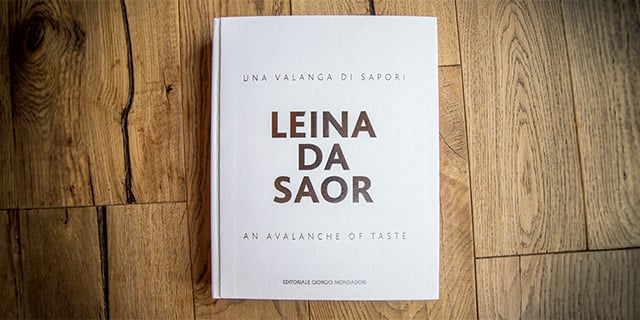
Today it is unique because it has been saved. The book Leina da Saor documented everything that risked disappearing. I know this cuisine will survive not the poverty of the past, but the somewhat empty abundance of the present. And I feel both the responsibility and the honor of passing it on to future generations and to the tourists who arrive from all over the world.
Reinterpreting without bertraying - by Mirko Bormolini
In Italy, two opposing forces have always coexisted: tradition, which demands respect, and innovation, which pushes for change. It’s a delicate balance everywhere, but at 1.816mt it reaches its peak: in Livigno every dish has deep roots, and every variation must reckon with an inheritance you cannot ignore.
Reinterpreting a dish without betraying its origins means understanding which ingredients must remain and which can change. The main ingredient is untouchable: it is the soul of the dish. Think of carbonara: egg, pecorino and guanciale are its identity. Remove the egg, and it is no longer carbonara.
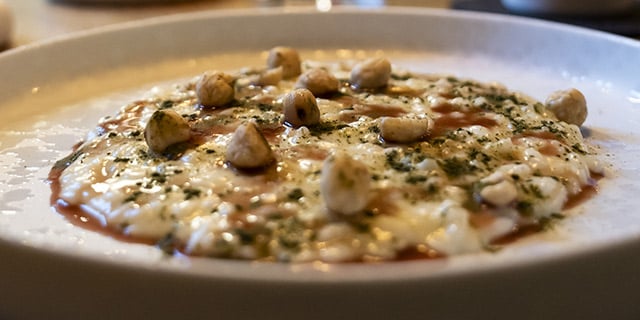
When I work on a traditional recipe, I intervene on secondary elements: textures, temperatures, presentation, deconstruction, modern techniques such as low-temperature cooking, siphons, fermentations. Whoever eats it must immediately perceive the original dish. If they don’t recognize it, it’s not a reinterpretation: it’s a variation. And that’s not what I want to do.
Elegance as discipline - by Michele Talarico
At high altitude, elegance takes on a different meaning. At 1.816mt it is not decoration, not abundance. It is clarity, restraint, truth. The mountain teaches you that everything superfluous weighs you down, while what is essential remains. This is where my idea of elegance in the kitchen begins.
This is why I work with simple, identity‑driven ingredients and try to enhance them without masking them, removing everything superfluous. Elegance lies in the precision of cooking, in the balance of often intense flavors, in the ability to make the dish readable so that it truly tells the story of the territory, the season, and the altitude.
Even aesthetics follow this line: clean, essential, never contrived. Elegance is not decoration, it is truth.
A thread connecting past and future - by Andrea Galli
Among the mountains of Livigno, where time seems to follow the rhythm of the seasons, gastronomic tradition still lives in the gestures, aromas and flavors of the past. This precious heritage is preserved in the pages of Leina da Saor. Every recipe tells a story: of families, grandparents, kitchens warmed by fire, dishes prepared with whatever the mountain offered.
For me, Leina da Saor is much more than a book: it is a thread connecting past and future. It is the desire to safeguard our roots and keep them alive through the recipes that nourished and narrated our people. It is a way of saying that this cuisine does not belong only to the past: it belongs to those who will carry it forward.
The ingredients that tell Livigno’s story - by Agostino Cusini
At high altitude, ingredients are never just ingredients: they are the direct reflection of the mountain. Here, where summer is brief and winter seems endless, nature is essential, functional, without frills. Every product is born from a fragile balance between climate, altitude and human ingenuity. It is a cuisine that offers no abundance, but demands respect. And it rests on two fundamental pillars: pasola and borsat.
Pasola is a mountain turnip that cannot fully mature and remains small. At the end of September it was harvested, tied into bundles and hung from the beams of the hayloft to dry. The following year it became the star of lughegna da pasola, a dried sausage made with pork lard and boiled pasole.
Borsat, on the other hand, is a small pouch of sheep skin filled with its own meat seasoned with salt and garlic. After shearing and slaughtering, squares of skin were cut, filled, hand‑sewn, the remaining wool burned over an open flame, then washed and finally boiled in broth. These dishes tell the story of a harsh, ingenious, essential mountain.
My dish, my identity - by Matteo Grasso
Some dishes are not born in the kitchen, but in memory. Dishes you don’t learn from a book or a master, but from a precise moment in your life: a smell that stays with you, a gesture you observe as a child, a snack that becomes a ritual. In the mountains this happens often: food is not just nourishment, it is a way to bring people together, to stop time, to give shape to memories.
For me, my culinary identity begins like this: with a simple flavor that has the power to bring me home: apple fritters. They represent a personal memory tied to snacks with my grandparents. A simple dish, yet rich in meaning, capable of bringing me back to authentic, happy moments. It is also a dish that unites: something prepared and shared in the family, in joyful moments.
In my kitchen I reinterpret them in a contemporary way, working on the textures of the apple and lightening the frying, but without ever losing the essence. It is how I tell my story: blending memory, simplicity and technique.
The greatest challenge - by Raffaele Rodigari
In the mountains, respecting raw materials is not a choice: it is the rule. Here every ingredient comes from a land that gives little and demands much, and for this very reason deserves absolute attention. From this awareness comes my daily challenge: honoring raw materials to stop time.
The secret lies in making Valtellina traditional dialogue with modern techniques: a game of balance that allows people to disconnect from frenzy and free their minds.
But the truest satisfaction is involving the new generation: showing young people the beauty of this craft, made of constant discovery and exciting milestones. Passing on the passion for a job that creates authentic connections through taste is my daily victory.
The evolution of Alpine cuisine - by Nicolas Cusini
In the mountains, cuisine changes slowly but when it changes, it does so deeply. Here every transformation is born from the territory: from the herbs growing among rocks, from alpine dairy products, from the seasons that set the pace. It is an evolution that does not break with the past, but carries it forward with new tools.
In recent years, Alpine cuisine has been experiencing a sustainable renaissance. Tradition blends with modern techniques, enhancing local ingredients and alpine products. There is growing attention to herbs, roots, infusions, and transformations that allow the territory to be narrated in new ways.
Mountain cuisine is no longer seen as heavy: it is a gastronomic experience that speaks of identity, nature and seasonality.
What you should taste when you arrive in Livigno - di Ilenia Zini
Arriving at 1.816mt means entering a different rhythm. At high altitude, flavors change and they become sharper, truer: it’s like opening a door and discovering a new world made of simple ingredients and gestures that withstand time.
And those who arrive in Livigno should take the time to truly discover the flavors of the territory. It’s not just about tasting a dish, but about living an experience made of authenticity, seasonality and the quality of raw materials.
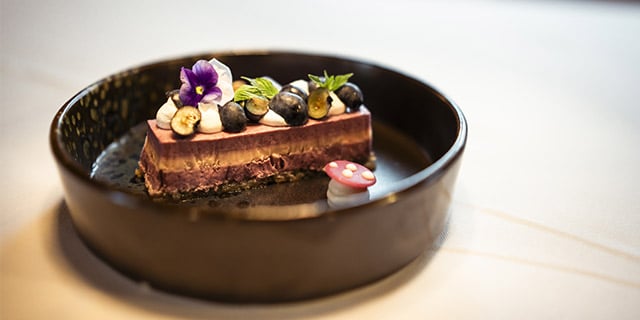
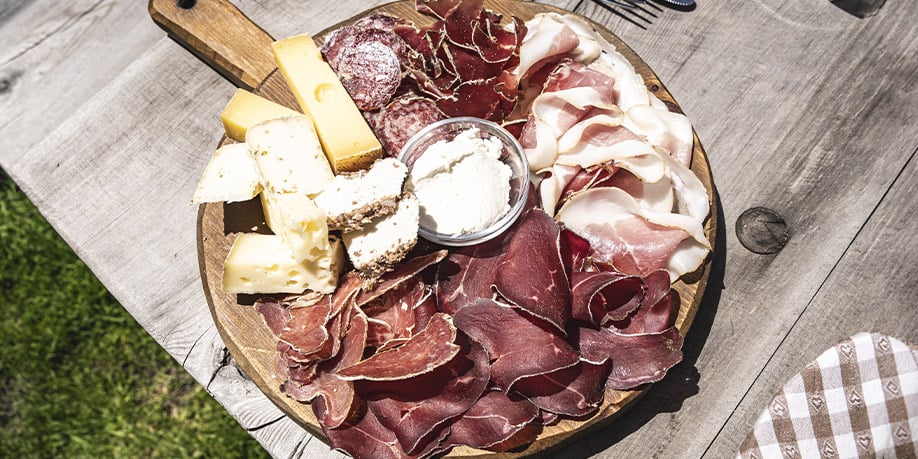
I think of pizzoccheri, sciatt, bresaola: symbolic dishes that tell the story of Valtellina. In my work as a pastry chef, I believe dessert should also extend this narrative: local ingredients, seasonality, tradition reinterpreted with contemporary sensitivity.
A dessert can become the most coherent way to conclude a journey through the flavors of Livigno.
On the path to taste
In a territory where cuisine is memory, identity and storytelling, the gastronomic experience becomes a way to truly enter the spirit of Livigno. This is why registrations are officially open for the Sentiero Gourmet, the event that each year transforms the valley into an open‑air tasting route, where chefs, producers and local flavors accompany participants along a unique itinerary.
Tickets are already available and can be purchased directly on MyLivignoPass, securing a place in one of the most anticipated experiences of the summer.


0 Comments